 flowmance
Blog
Discover the latest tips and trends.
Guides, honest platform comparisons and original data from the team behind 400+ website templates.
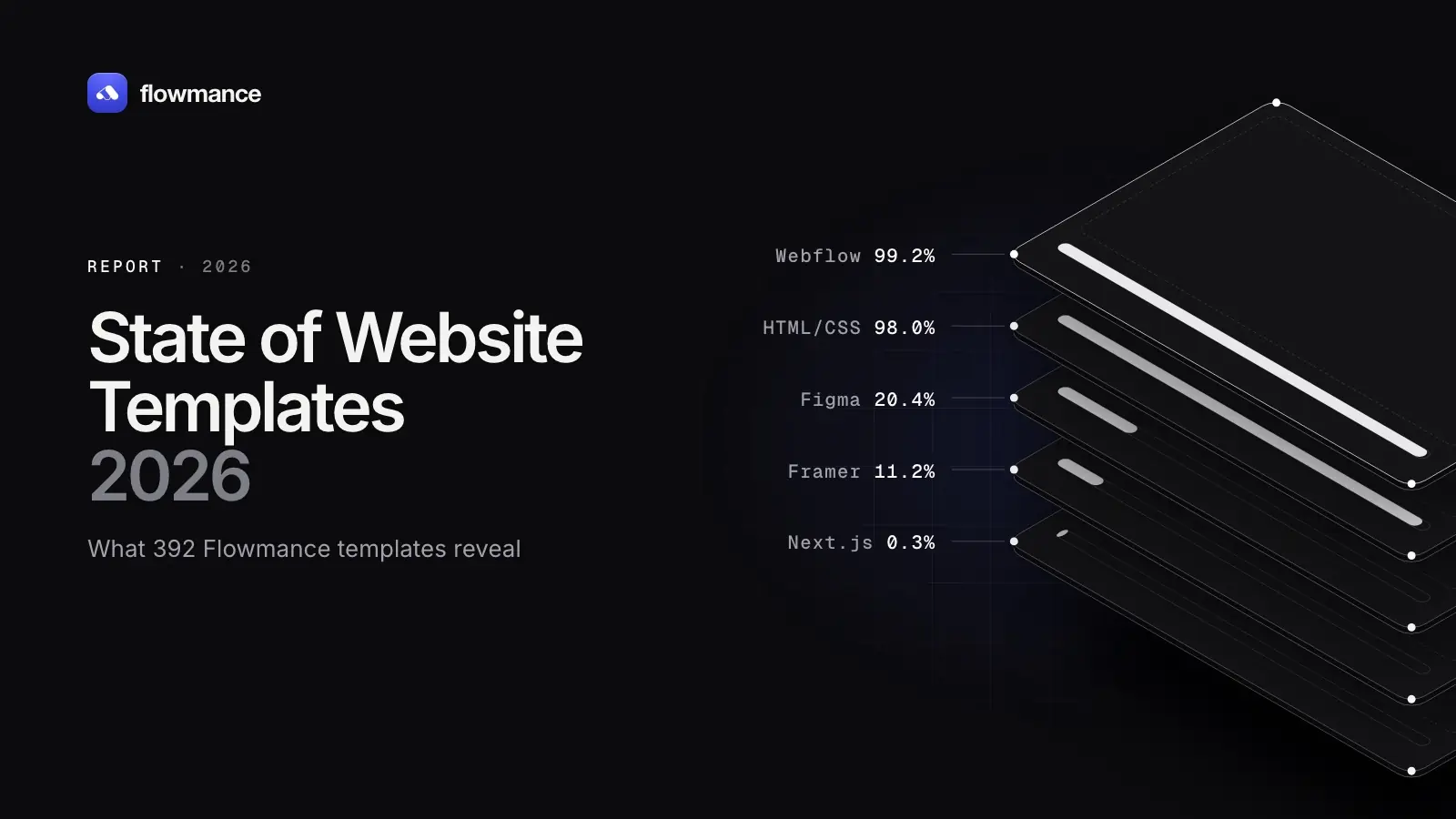
State of Website Templates 2026: What 392 Flowmance Templates Reveal
Original Flowmance data from 392 template records reveals how Webflow, HTML, Figma, Framer and Next.js formats are distributed across a multi-platform template library in 2026.
392Templates analyzed99.2%Have a Webflow version98.0%Have an HTML versionRead the report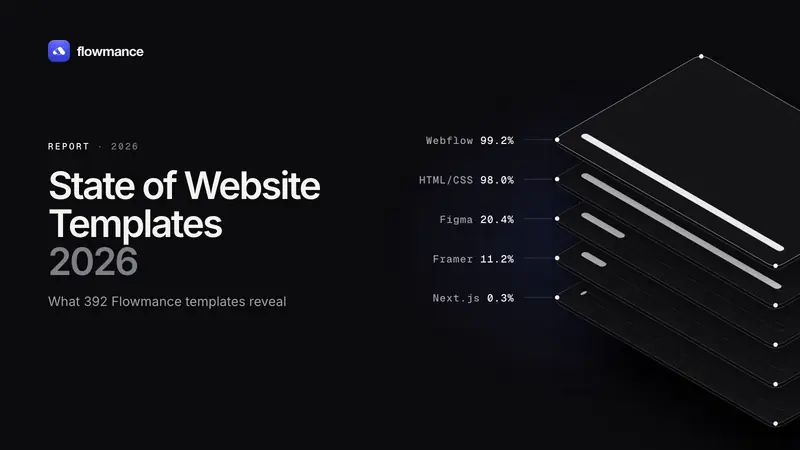
State of Website Templates 2026: What 392 Flowmance Templates Reveal
Original Flowmance data from 392 template records reveals how Webflow, HTML, Figma, Framer and Next.js formats are distributed across a multi-platform template library in 2026.
5 min read
Framer vs HTML in 2026: Visual Publishing vs Code Ownership
Framer vs HTML in 2026: compare visual publishing, code ownership, hosting, CMS, SEO, portability and maintenance to choose the right website workflow.
5 min read
Webflow vs HTML in 2026: Which Is Better for Your Website?
Webflow vs HTML in 2026: compare visual editing, code ownership, CMS, hosting, static export limits, DevLink React interoperability, SEO and maintenance.
6 min read
Where to Buy Website Templates in 2026: Webflow, Framer & HTML
Where should you buy website templates in 2026? Compare Webflow, Framer, HTML marketplaces and independent libraries by workflow, ownership, support and licensing.
4 min read
Webflow CMS vs Framer CMS in 2026: Which Is Better?
Webflow CMS vs Framer CMS in 2026: verified pricing, CMS limits, content modeling, dynamic rendering limits, editing, filters and scaling economics.
4 min read
Best AI Startup Website Templates in 2026: 8 Strong Webflow & Framer Picks
Compare 8 of the best AI startup website templates in 2026 across Webflow and Framer, with practical picks for AI agents, SaaS, automation and B2B products.
4 min read
Figma to Webflow vs Framer in 2026: Which Workflow Is Better?
Figma to Webflow vs Framer in 2026: compare import quality, design systems, CMS, responsiveness, motion and handoff to choose the right production workflow.
5 min read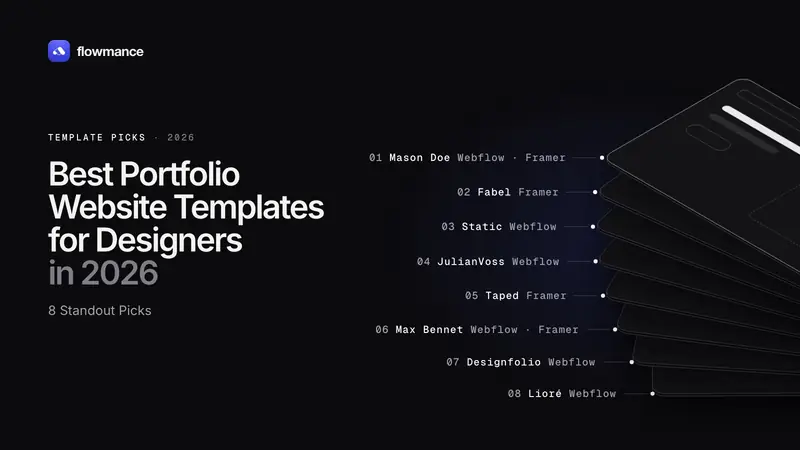
Best Portfolio Website Templates for Designers in 2026: 8 Standout Picks
Discover the best portfolio website templates for designers in 2026, with standout Webflow and Framer picks plus practical tips for choosing the right one.
9 min read
Webflow vs Framer for SEO in 2026: Which Is Better?
Webflow vs Framer SEO and AEO in 2026: current native SEO controls, CMS scale, JSON-LD, AI visibility, Google AI guidance, localization and which platform fits each growth model.
7 min read
Agency Website Template Checklist: What to Look For in 2026
Choose an agency website template by case-study structure, service positioning, CMS, proof, responsive behavior, conversion paths, and customization potential—not the hero alone.
2 min read
HTML Templates vs No-Code Builders in 2026: Webflow, Framer & Static HTML
Compare static HTML templates with Webflow and Framer in 2026 across code ownership, hosting, CMS, SEO, portability, maintenance and launch speed.
6 min read
Website Template Licensing in 2026: Webflow, Framer & Client Use Rules
Webflow, Framer and Flowmance template licensing explained for 2026: client use, single-use vs multi-project rights, transfers, reuse, exports and resale restrictions.
6 min read
Webflow SEO Guide for 2026: SEO & AEO Best Practices
A practical 2026 Webflow SEO and AEO guide covering search intent, schema, organization entities, canonicals, sitemaps, redirects, CMS, internal linking, images and indexing.
6 min read
How to Choose the Right Website Template for Your Industry
Choose a template by content model, buyer journey, trust signals, conversion path, CMS, integrations, and maintainability—not simply by industry label or demo imagery.
1 min read
How Freelancers Can Use Website Templates Without Looking Generic
Freelancers can use templates to save production time while keeping client work distinct through strategy, content, typography, imagery, CMS, layout, and interaction choices.
1 min read
8 Webflow Template Mistakes That Create Extra Work
Avoid common Webflow template mistakes: choosing by aesthetics, keeping demo structure, ignoring CMS, adding too many overrides, inheriting motion, and skipping production QA.
2 min read
Healthcare Website Template Checklist: Clinics, Dentists & Wellness
Evaluate healthcare website templates by services, practitioner profiles, booking, location details, trust, accessibility, privacy, mobile usability, and maintainability.
2 min read
How to Use a Website Template When the Deadline Is Tight
A template can save time under a tight deadline if you control scope, choose a close structural match, replace real content early, and limit unnecessary customization.
1 min read
Best SaaS Website Templates in 2026: 8 Webflow Picks
Eight SaaS-focused Webflow templates for 2026, with practical guidance for launching a clear, scalable and conversion-focused software website.
4 min read
Flexbox vs Grid in Webflow: When to Use Each
Use Flexbox for one-dimensional alignment and Grid for two-dimensional page structure. Learn how to combine both in Webflow without creating unnecessary breakpoint fixes.
2 min read
Website Templates vs Custom Design in 2026: Cost, Speed & Flexibility
Website template or custom design? Compare cost, launch speed, flexibility, scalability, marketplace pricing and a practical total-cost framework for choosing in 2026.
6 min read
Landing Page Design in Webflow: A Practical Conversion Checklist
Build clearer Webflow landing pages with focused intent, strong message hierarchy, useful proof, low-friction forms, mobile QA, performance testing, and measurable experiments.
2 min read
How to Structure a SaaS Marketing Site in Webflow for Growth
A scalable SaaS site needs clear positioning, reusable product and use-case structures, proof, CMS-driven resources, conversion paths, and a maintainable design system.
2 min read
How to Customize a Webflow Template Like a Professional
A professional Webflow template customization starts with the brief, real content, a shared design system, CMS cleanup, correct breakpoint workflow, and launch QA.
2 min read
Webflow + Shopify: When a Hybrid Ecommerce Stack Makes Sense
A Webflow marketing site paired with Shopify commerce can offer design freedom and mature store operations, but the added integration complexity must earn its keep.
2 min read
8 Common Webflow Mistakes in 2026—and How to Avoid Them
Avoid eight common Webflow mistakes: poor structure, one-off classes, excessive breakpoint fixes, weak CMS models, unnecessary motion, heavy assets, accessibility gaps, and rushed QA.
2 min read
How to Build a Webflow Blog CMS in 2026
Plan a Webflow blog around a clean CMS model, author and category strategy, readable article template, internal linking, metadata, performance, and an editorial workflow that scales.
2 min read
Small Business Branding on a Budget: Where a Ready-Made Logo Fits
A ready-made logo can be a sensible early-stage branding option for small businesses, but differentiation comes from typography, color, imagery, messaging, and consistent application.
1 min read
Adding Custom Code to Your Webflow Site Without Breaking It
Add custom HTML, CSS, and JavaScript to Webflow more safely by scoping code, testing on staging, monitoring errors, protecting accessibility, and minimizing third-party weight.
1 min read
How Agencies Can Standardize Webflow Client Delivery
Standardize Webflow agency delivery with reusable discovery, design systems, CMS models, components, QA, handoff, and template-selection rules without making client sites look identical.
1 min read
How Designers and Content Teams Can Collaborate in Webflow
A strong Webflow collaboration workflow separates structural design from routine content editing through CMS fields, components, naming, permissions, and clear publishing rules.
2 min read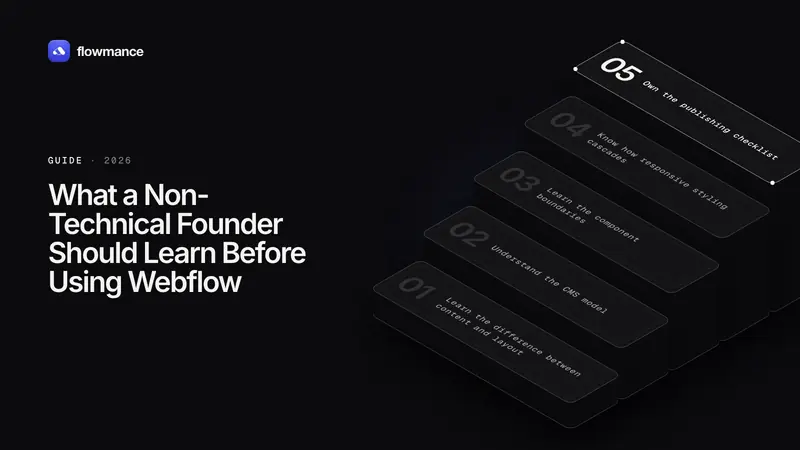
What a Non-Technical Founder Should Learn Before Using Webflow
Non-technical founders can manage a Webflow marketing site effectively by learning content structure, responsive basics, CMS, components, publishing, analytics, and when to involve a specialist.
2 min read
What Managed Webflow Hosting Changes for Marketing Teams
Webflow's managed hosting reduces server and plugin maintenance, but teams still need to own domains, publishing, performance, redirects, analytics, backups, and operational QA.
2 min read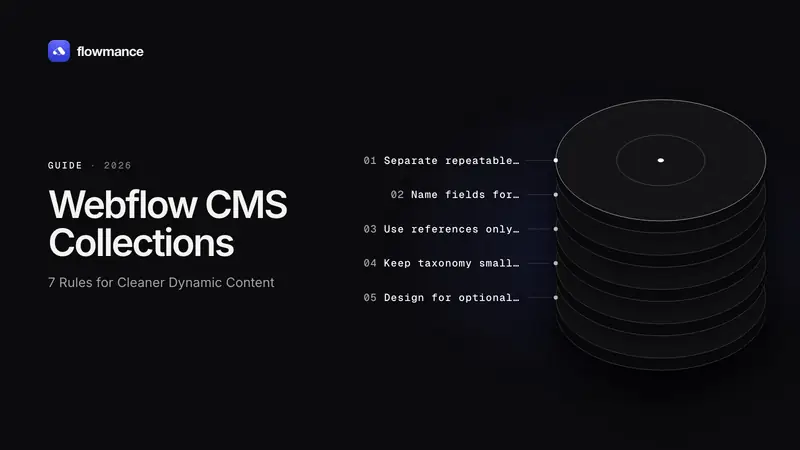
Webflow CMS Collections: 7 Rules for Cleaner Dynamic Content
Design cleaner Webflow CMS systems by modeling content first, using references intentionally, limiting taxonomy, handling optional fields, protecting slugs, and testing real data.
1 min read
Is Webflow Right for Your Agency in 2026?
Webflow fits agencies that value visual control, reusable systems, CMS, and marketing-team handoff. Evaluate project type, team skills, integrations, and client maintenance first.
2 min read
How to Design Blog Discovery in Webflow: Homepage, Categories & Related Content
Improve Webflow blog discovery with a focused homepage, useful categories, contextual internal links, related content, search, featured stories, and mobile-friendly navigation.
2 min read
What a SaaS Marketing Team Should Own in Webflow
Define a clear Webflow operating model for SaaS marketing teams: CMS content, landing pages, components, experiments, analytics, integrations, and boundaries with product engineering.
1 min read
Is Webflow Really No-Code? What Non-Coders Still Need to Learn
Webflow can build sophisticated sites visually without writing code, but non-coders still benefit from learning layout, classes, responsive behavior, CMS structure, accessibility, and web basics.
1 min read
Webflow vs WordPress in 2026: Which Fits Your Website Workflow?
Webflow and WordPress can both power serious websites. Compare visual control, CMS, plugins, hosting, maintenance, ecommerce, ownership, and team workflow before choosing.
1 min read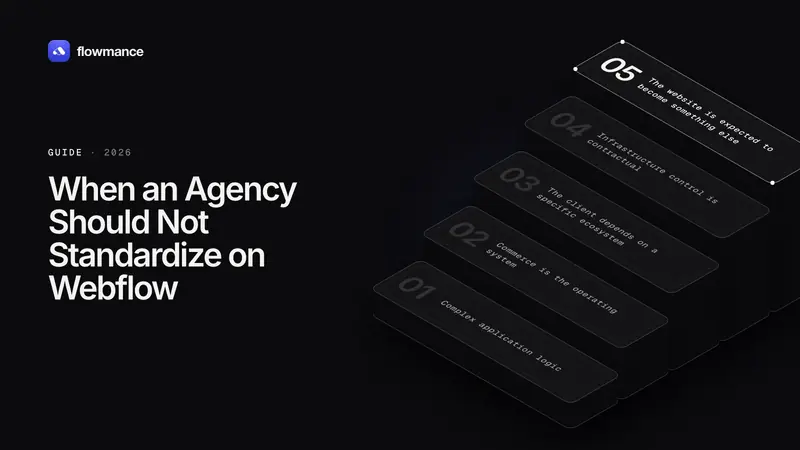
When an Agency Should Not Standardize on Webflow
Webflow is strong for many agency marketing-site projects, but application logic, complex commerce, infrastructure requirements, plugin dependencies, or client constraints can make another stack better.
1 min read
Best Architecture Website Templates in 2026: Webflow & Framer Picks
Compare standout architecture website templates for 2026 across Webflow and Framer, with practical guidance on CMS, project pages, responsive design, and choosing the right platform.
5 min read
When Is It Worth Migrating an Existing Website to Webflow?
A Webflow migration is worth considering when design, CMS, publishing, or maintenance constraints are slowing the team. Audit content, URLs, SEO, and integrations first.
1 min read
SaaS Website Template Customization: What to Keep, Adapt & Replace
Customize a SaaS template faster by auditing product sections, proof, pricing, CMS, integrations, screenshots, motion, and responsive behavior before redesigning page by page.
1 min read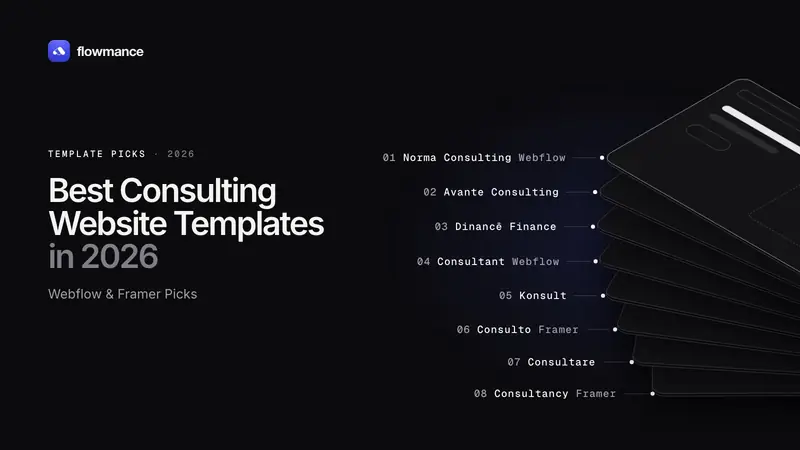
Best Consulting Website Templates in 2026: Webflow & Framer Picks
Compare the best consulting website templates for 2026 across Webflow and Framer, with practical picks for firms, advisors, coaches and B2B services.
5 min read
Does Every Business Need a Website in 2026?
Most businesses benefit from an owned website, but the required scope varies. Decide based on discovery, credibility, conversion, ownership, and customer behavior.
1 min read
Webflow for SaaS Marketing Teams in 2026: Strengths & Limits
Webflow can give SaaS marketing teams fast visual iteration, CMS, components, SEO controls, and managed publishing, but it is not a replacement for the product application stack.
1 min read
What Good Website Template Support Should Actually Cover
Evaluate template support by documentation, setup help, bug fixes, platform compatibility, response clarity, scope boundaries, and update practices—not vague promises of unlimited help.
1 min read
Native Webflow vs Custom Code: When to Use Which
Prefer native Webflow features for maintainable layout, CMS, components, forms, and interactions; add custom code only when a requirement clearly exceeds the native system.
2 min read
When an All-Access Template Library Makes Sense for an Agency
An all-access template library creates value when an agency builds repeatable website types and can customize strong foundations faster than starting every project from zero.
1 min read
Full Website Template vs Section Library: Which Saves More Time?
A full website template is faster when page architecture is already close to the brief; a section library is better when you want to assemble a more custom structure from reusable blocks.
1 min read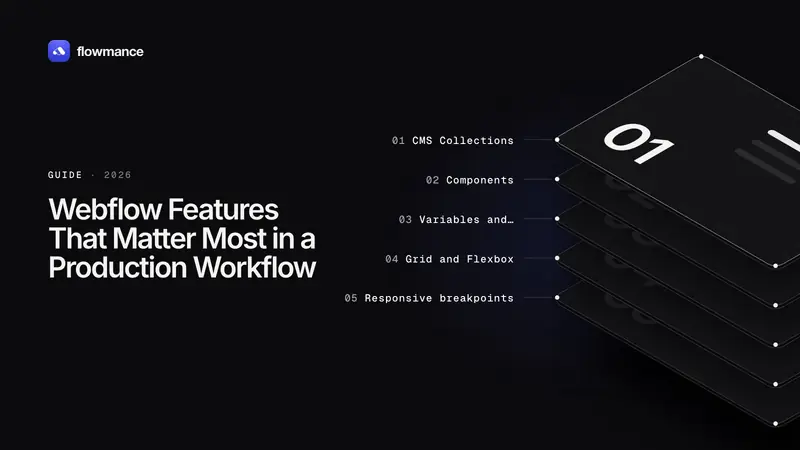
Webflow Features That Matter Most in a Production Workflow
The most useful Webflow features are the ones that improve production: CMS, components, variables, responsive layout, forms, redirects, localization, and publishing controls.
1 min read
How to Build an Internal Webflow Template Shortlist for Repeat Projects
Agencies can move faster by maintaining a small vetted shortlist of Webflow templates grouped by project type, CMS quality, responsive behavior, and customization cost.
1 min read
When a Ready-Made Logo Library Makes Sense—and When to Hire a Designer
A logo library can be a fast starting point for low-risk brands and experiments. A custom designer is worth it when differentiation, strategy, or complex brand systems matter.
1 min read
Webflow Hosting vs WordPress Hosting: What Are You Actually Comparing?
Webflow bundles managed hosting with its site platform, while WordPress hosting varies widely by provider. Compare operations, control, maintenance, plugins, and ownership.
1 min read
A Faster Webflow Workflow: How to Use Templates Without Making Every Site Look the Same
A practical agency workflow for using Webflow templates as a starting system while keeping each client site original, maintainable, responsive, and brand-specific.
4 min read
Symmetry in Logo Design: When Balance Helps—and When It Doesn't
Symmetry can make a logo feel stable and memorable, but optical balance matters more than perfect geometry. Learn when symmetry, asymmetry, and correction work best.
1 min read
Flowmance Template Licensing: Client Use, Reuse, Downloads & Ownership
A plain-English guide to Flowmance template licensing: client projects, customization, one-project licenses, plan access, redistribution, ownership, and downloads.
4 min read
How to Customize a Logo Template for Your Brand
Customize a logo template through typography, color, spacing, lockups, supporting graphics, and usage rules so the final identity feels deliberate and consistent.
1 min read
Key Features to Look for in a Real Estate Website Template
Evaluate real-estate templates by listing CMS, filters, property pages, galleries, maps, agent profiles, inquiries, mobile usability, and future scalability.
2 min read
6 Blog Website Structures: Which Publishing Model Fits You?
Compare six blog structures—company blog, editorial magazine, personal publication, knowledge base, resource hub, and research library—to choose the right CMS and navigation model.
1 min read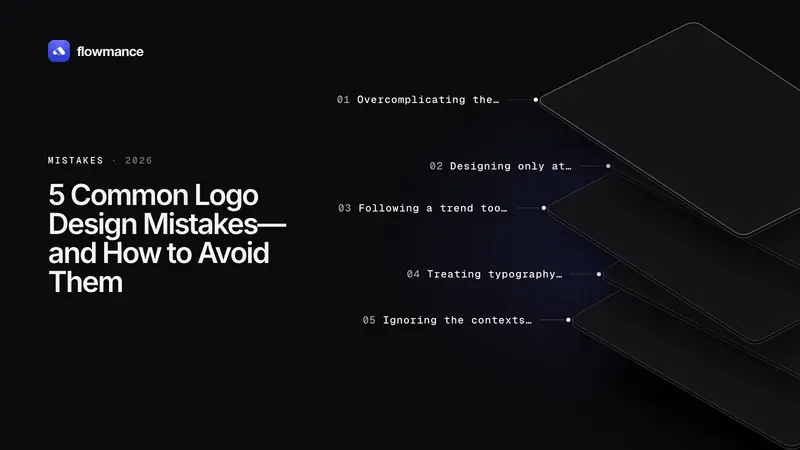
5 Common Logo Design Mistakes—and How to Avoid Them
Avoid five common logo mistakes: overcomplication, weak small-size performance, trend dependence, poor typography, and ignoring real-world applications.
1 min read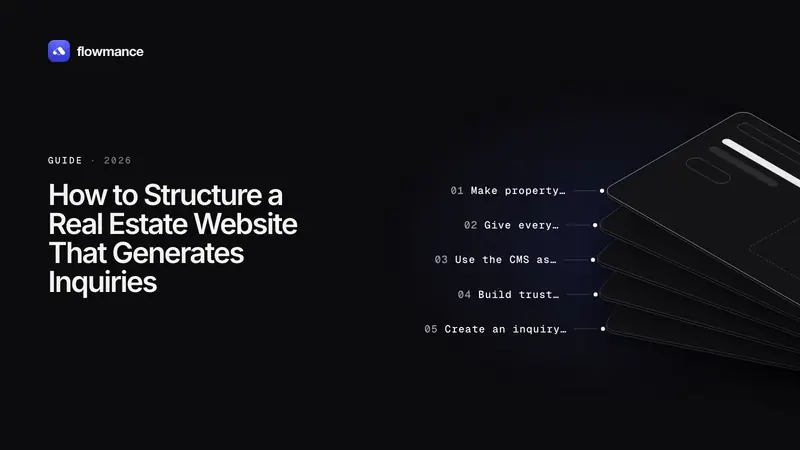
How to Structure a Real Estate Website That Generates Inquiries
A real-estate website should turn listings and local expertise into qualified inquiries. Use clear property pages, search, trust signals, and conversion paths.
2 min read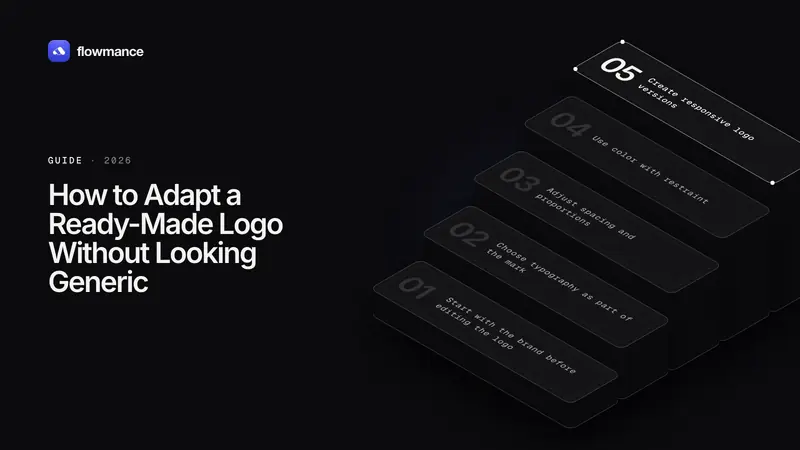
How to Adapt a Ready-Made Logo Without Looking Generic
A practical guide to turning a ready-made logo into a distinctive brand asset through typography, spacing, color, proportion, context, and consistency.
2 min read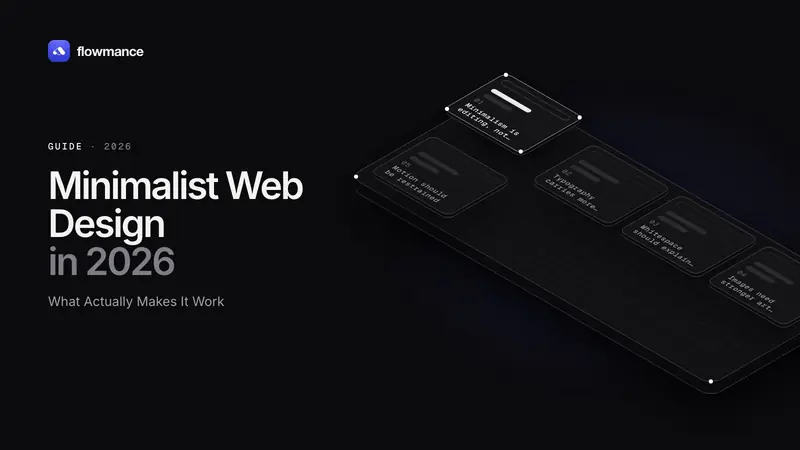
Minimalist Web Design in 2026: What Actually Makes It Work
Minimalism works when it improves hierarchy, speed, readability, and focus—not simply when a page has lots of white space and very little content.
1 min read
Website Template vs Blank Canvas: Which Should You Start With?
Start from a template when structure is repeatable and time matters; start blank when the project depends on a genuinely unique system or unusual requirements.
1 min read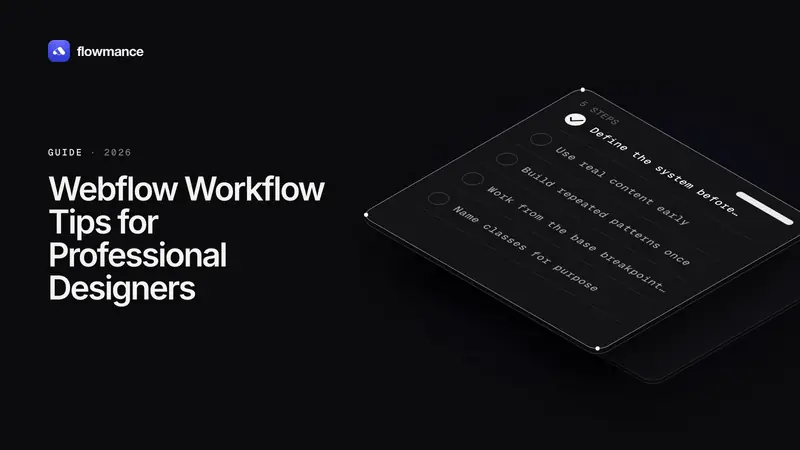
Webflow Workflow Tips for Professional Designers
Practical Webflow workflow improvements for professional designers: structure first, real content early, reusable components, clean breakpoints, and disciplined QA.
1 min read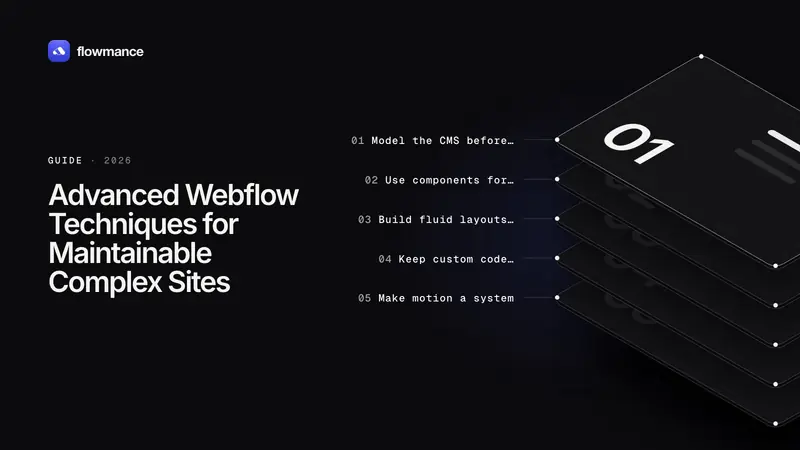
Advanced Webflow Techniques for Maintainable Complex Sites
Advanced Webflow work is less about flashy effects and more about scalable CMS, components, custom code, interactions, responsive systems, and clean architecture.
1 min read
When Webflow Is the Right Choice—and When It Isn't
Webflow is a strong fit for design-led marketing sites and structured CMS projects, but simpler builders or code-first stacks can be better for other needs.
1 min read
Mobile Website Optimization in 2026: What to Test Beyond Responsive Design
Responsive layouts are only the start. Test mobile navigation, touch targets, forms, media, performance, content priority, and real-device behavior before launch.
2 min read
How to Evaluate an SEO & AEO-Friendly Website Template in 2026
Evaluate an SEO and AEO-friendly website template by intent, crawlability, headings, CMS, schema, internal links, evidence, image alt text, performance and indexability.
4 min read
How to Build a Maintainable Design System in Webflow
A practical Webflow design-system workflow using classes, variables, components, layout rules, naming, and reusable patterns that stay manageable as a site grows.
2 min read
How to Choose a No-Code Website Builder in 2026
Choose a no-code website builder by project type, design control, CMS, ecommerce, maintenance, and ownership—not by a generic top-five ranking.
2 min read
Mobile-First vs Desktop-First in Webflow: How Breakpoints Really Work
Webflow starts from a desktop base breakpoint, not a mobile-first editing model. Here is how styles cascade, when to add overrides, and how to test responsive layouts properly.
4 min read
Design Subscription vs Template Library: Which Saves More Time?
Compare an on-demand design subscription with a website template library: what each solves, where costs hide, and which workflow fits agencies and repeat projects.
2 min read
What to Look for in a SaaS Website Template in 2026
A SaaS template should support clear product messaging, real UI, pricing, proof, CMS content, integrations, responsive behavior, performance, and room to grow.
3 min read
Webflow Features Designers Should Know in 2026
The Webflow features worth knowing in 2026: components, properties, slots, variants, variables, CMS, rich text components, code components, breakpoints, and SEO/AEO tools.
4 min read
Web Design Trends in 2026: What Actually Matters Now
A grounded look at web design trends in 2026: stronger typography, expressive motion, modular systems, AI-assisted production, 3D, accessibility, and more useful personalization.
4 min read
How to Get More Value From a Website Template Subscription in 2026
A practical guide to getting real value from a website template subscription: choosing the right starting point, checking licensing, customizing well, and avoiding wasted downloads.
4 min read
How Website Templates Save Development Time — and Where They Don’t
Website templates can save time on structure, responsive patterns, CMS, and repeated UI, but they can also slow a project down when the fit is poor. Here is where the real savings are.
3 min read
When Lifetime Template Access Makes Sense
Lifetime is one payment for the platforms you pick, with priority support and early access to new drops. It pays off when you'll build with templates for years.
1 min read
How to Turn a Webflow Template Into a Professional Client Website
A practical client workflow for adapting a Webflow template: discovery, content, CMS, components, accessibility, responsive QA, forms, SEO, and handoff.
3 min read
How to Choose a Flowmance Plan
Pick a plan by how many platforms you build on and how long you'll use the library: 1 platform, 2 platforms or All Access, billed quarterly, yearly or once for Lifetime.
1 min read
How to Compare Website Template Libraries: Flowmance vs Marketplaces
Compare template libraries and marketplaces by project quality, structure, platform coverage, licensing, update practices, support scope, search experience, and total workflow fit.
1 min read
Are Website Template Bundles Worth It? A Practical Guide for Agencies
Template bundles can save time for agencies and freelancers, but only when the library matches the work. Here is how to judge value, licensing, quality, and workflow fit.
4 min read
How Template Libraries Fit Into a Modern Design System Workflow
A template library can accelerate production when teams extract reusable layout patterns into their own design system instead of copying complete sites unchanged.
1 min read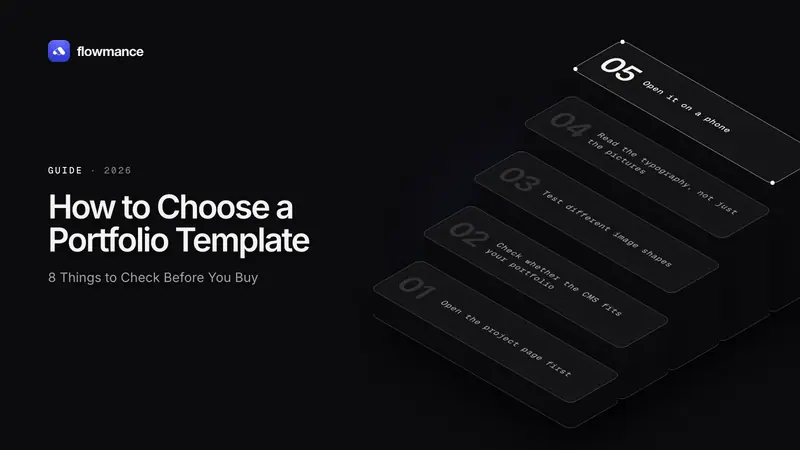
How to Choose a Portfolio Template: 8 Things to Check Before You Buy
Choose a portfolio template by project-page quality, CMS structure, image handling, typography, mobile behavior, performance, customization, and contact flow.
3 min read
Website Template Library Quality Checklist
Judge a website template library by structural quality, responsive behavior, CMS, components, accessibility, performance, licensing, updates, format coverage, and support scope.
1 min read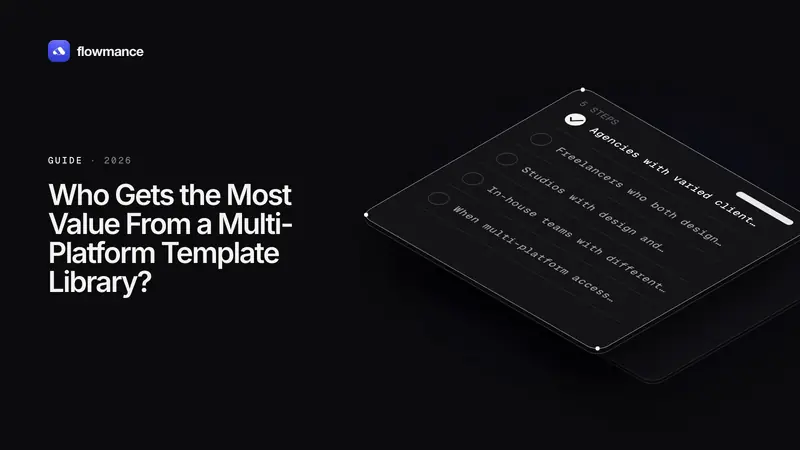
Who Gets the Most Value From a Multi-Platform Template Library?
A multi-platform template library is most valuable to agencies, freelancers, studios, and in-house teams that move between Webflow, Framer, Figma, HTML, and developer-led workflows.
1 min read
How to Audit a Webflow Template Before Starting a Client Project
Before committing to a Webflow template, audit its page structure, classes, components, CMS, responsive behavior, interactions, accessibility, and cleanup cost.
2 min read
How to Launch a SaaS Website with a Webflow Template: A Practical Checklist
A practical SaaS launch checklist for Webflow: positioning, page structure, product proof, CMS, pricing, forms, analytics, SEO, performance, and responsive QA.
4 min read
Website Template Categories Explained: Agency, SaaS, Portfolio, Business and More
Template categories are useful shortcuts, but each one solves a different content problem. Learn what agency, SaaS, portfolio, business, blog, and ecommerce templates usually prioritize.
3 min read
How to Choose a Website Design Style That Fits Your Brand
A website style should match the brand's personality, content, audience, and product. Compare minimal, editorial, bold, corporate, brutalist, and image-led directions.
3 min read
How Designers Can Use Templates Without Losing Creative Direction
Templates can protect creative time when designers keep control of concept, content hierarchy, typography, imagery, motion, and interaction instead of treating the demo as the brief.
1 min read
How to Customize a Website Template So It Does Not Look Like a Template
Make a website template feel custom by changing structure, content rhythm, typography, imagery, components, and interactions — not just colors and logos.
3 min read
Webflow SEO in 2026: A Practical Checklist That Still Matters
A practical Webflow SEO checklist for 2026 covering search intent, titles, internal links, images, canonical URLs, sitemaps, schema, CMS content, and AEO.
5 min read
Responsive Web Design with Webflow Templates: A Practical 2026 Guide
How to adapt a Webflow template across desktop, tablet, and mobile without breaking its design. A practical guide to breakpoints, content, images, type, and testing.
4 min read
Is Flowmance Worth It? When a Template Library Makes Sense
An honest look at when Flowmance is useful, when a single template may be enough, and what agencies and freelancers should check before choosing a template library.
3 min read
Webflow Performance in 2026: What Actually Makes a Site Fast
A practical 2026 Webflow performance guide covering Core Web Vitals, images, JavaScript, CSS, third-party scripts, interactions, fonts, embeds, and real-world testing.
4 min read
What to Look for in a Startup Website Template in 2026
A startup template should support positioning, product proof, conversion, hiring, content, and fast iteration. Use this checklist before choosing a design.
2 min read
Webflow vs Website Builders: When More Design Control Is Worth It
Webflow offers deeper layout and CMS control than many simple website builders, but that flexibility also creates a steeper learning curve. Here is how to decide.
2 min read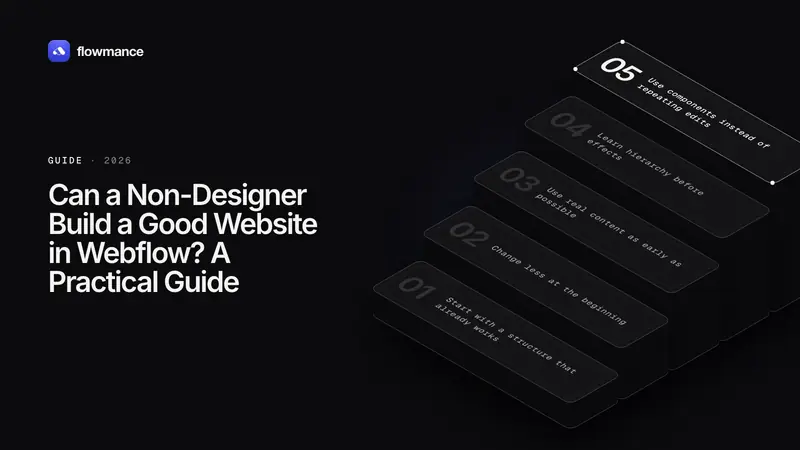
Can a Non-Designer Build a Good Website in Webflow? A Practical Guide
Yes, a non-designer can build a strong Webflow site with the right starting point. Focus on structure, typography, content, responsive behavior, and restraint.
3 min read
Photography Website Templates: What to Look For Before You Choose
A practical guide to choosing a photography website template: portfolio structure, image performance, galleries, CMS, mobile crops, inquiries, and brand fit.
2 min read
Webflow Tips for 2026: Practical Ways to Build Better Sites
Practical Webflow tips for 2026 covering components, variables, breakpoints, CMS structure, interactions, custom code, performance, and cleaner client handoff.
4 min read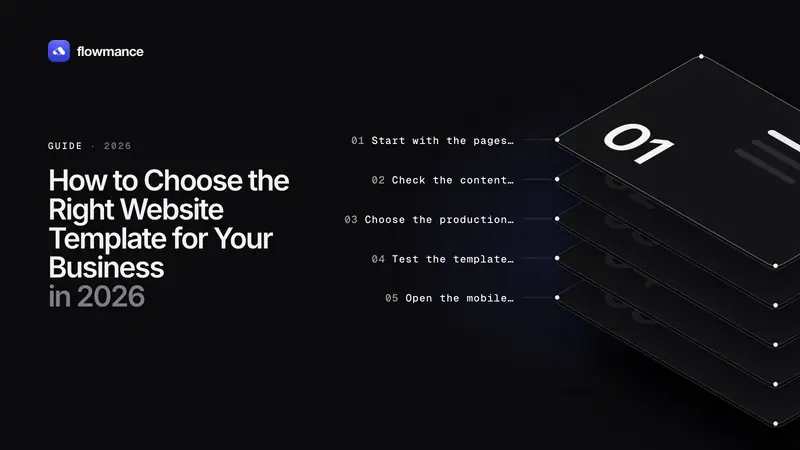
How to Choose the Right Website Template for Your Business in 2026
Choose a website template by structure, content needs, platform, responsive behavior, CMS, licensing, and customization potential — not by the homepage alone.
3 min readNo articles match that search.