Figma to Webflow vs Framer in 2026: compare import quality, design systems, CMS, responsiveness, motion and handoff to choose the right production workflow.
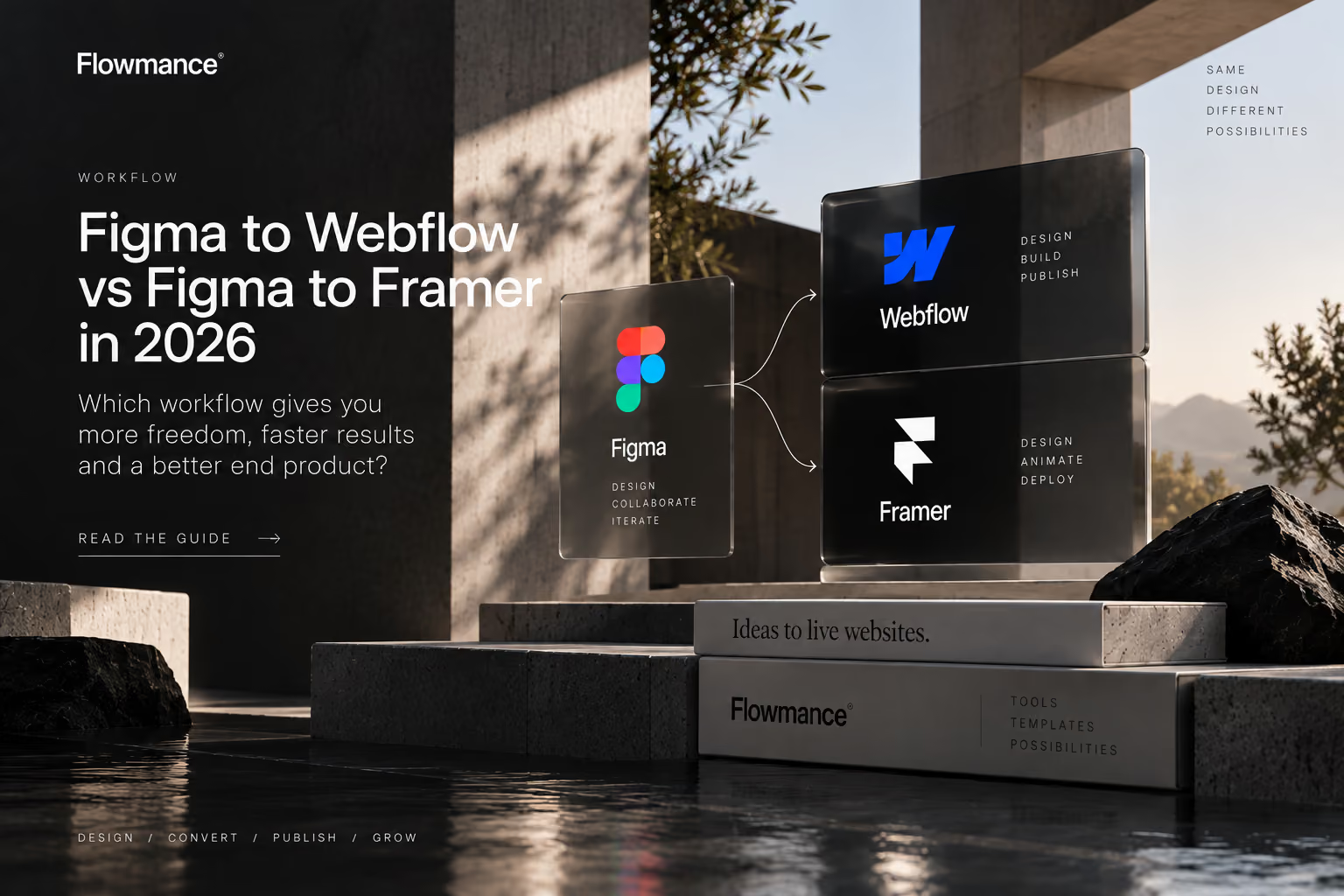
Short answer: choose Figma to Webflow when the website needs a structured production system, deeper CMS architecture, semantic control and long-term maintenance by designers, marketers and developers. Choose Figma to Framer when the priority is the fastest design-led path from polished Figma layouts to a live marketing site, portfolio or campaign with strong motion.
The importer should not decide the platform. The more important question is what the website needs after the Figma handoff is finished.
| Factor | Figma to Webflow | Figma to Framer |
|---|---|---|
| Best fit | Structured marketing sites, CMS-heavy sites, larger design systems | Portfolios, startup sites, campaigns and design-led marketing sites |
| Figma handoff | Strong system-oriented workflow | Fast visual import workflow |
| Design systems | Strong when Figma uses Auto Layout, components and variables | Good visual continuity; plugins can sync styles and assets |
| CMS after handoff | Strong for structured content architecture | Strong for lighter-to-medium marketing content |
| Motion iteration | Powerful, but production-system oriented | Especially fast for designers |
| Team handoff | Well suited to multidisciplinary production teams | Especially natural when the designer also builds the site |
A clean Figma file transfers best when it already behaves like a system: Auto Layout instead of arbitrary positioning, reusable components, consistent variables and styles, sensible layer names, and intentional responsive behavior. The goal is not merely to reproduce one desktop frame; it is to turn the design into a maintainable website.
Once the visual foundation is in Webflow, the production build can be connected to CMS Collections, reusable components, forms, interactions, SEO controls, structured content and custom code. That makes Webflow particularly useful when the Figma handoff is the beginning of a larger website system rather than the final design step.
For production starting points, browse Flowmance’s Webflow templates. If design approval happens before implementation, the Figma template library is the more relevant starting point.
Framer’s official Figma workflow lets designers move selected layers into Framer while carrying over important layout information such as Auto Layout, hierarchy and fill properties. Framer’s own Academy describes the workflow as selecting layers in Figma and pasting them into a Framer project through its Figma plugin.
This is attractive when the same person owns both design and implementation. The conceptual jump from canvas to website is small, and responsive layout, components, motion and publishing can continue in a design-oriented environment.
Framer also has a growing plugin ecosystem around Figma handoff. Figma Sync, published in May 2026, can sync Figma color styles, text styles, light/dark color modes and image assets. Design Sync, published in July 2026, focuses on creating native Framer color and text styles from a Figma file.
Browse Flowmance’s Framer templates when the final production platform is Framer.
Webflow has the edge when the handoff must become a structured production system. A well-organized Figma file can translate into a class, component and variable strategy that continues beyond the initial page build. This matters for websites with many page types, repeated content patterns and multiple people maintaining the site.
Framer has the edge in visual continuity and iteration speed. Its workflow is especially efficient when the designer wants to keep refining composition, responsive behavior and motion directly while building the live site. Marketplace plugins now make style transfer more systematic than a simple visual paste.
A Figma desktop frame is not a responsive website specification. Before handoff, use Auto Layout consistently, avoid unnecessary fixed dimensions, define reusable components and think through what happens to navigation, cards, media and typography between breakpoints.
After import, test real browser widths. A layout can look pixel-perfect at the original Figma viewport and still fail on a 13-inch laptop, tablet or narrow mobile screen. Production QA remains necessary on both platforms.
For a large resource center, many case studies, detailed relationships between content types or a site that will keep expanding, Webflow is generally the safer production choice. Its workflow naturally encourages teams to separate structured content from page design.
Framer’s CMS is increasingly capable and is a strong fit for portfolios, blogs, startup sites and many marketing sites. If the content model is straightforward and visual iteration is the larger priority, Framer’s faster design workflow may be more valuable than additional structural depth.
For a dedicated CMS comparison, see Webflow CMS vs Framer CMS.
Framer is particularly natural for designers moving from static composition into interactive marketing experiences. Layout experiments, component states and motion can be refined without a traditional design-to-development handoff.
Webflow can also produce sophisticated interactions, but teams often choose it because the visual layer sits inside a broader production system involving CMS, content operations and longer-term site maintenance.
Not always. Both platforms can be used to design directly in the production environment. Figma remains valuable when stakeholders need a design-approval phase, when a larger product or brand system already lives in Figma, or when the same design language must be shared across website, product and marketing teams.
If the website is relatively simple and the person designing it is also building it, designing directly in Framer or Webflow can remove an entire handoff stage.
A matching Figma file can shorten the workflow because design exploration starts from the same visual direction as the production template. Teams can refine layouts and brand decisions before implementation rather than reverse-engineering a live template.
Flowmance maintains Figma website templates alongside its Webflow and Framer libraries, while Flowmance+ is designed for teams working repeatedly across the broader template collection.
In 2026, Webflow is the stronger Figma handoff for structured, long-lived production systems; Framer is the faster Figma handoff for design-led visual websites. Choose based on CMS complexity, team ownership and how the site will evolve after launch—not on which importer saves the most clicks on day one.








Don’t miss out on our superb, customizable templates designed to enhance your web design experience. We constantly add new templates and components.

Explore stunning Webflow, Framer, HTML5, Next.js and Figma templates designed to spark your next big idea.


*Rest assured that your data is safe with us, and you'll only hear from us 1 time per month.