Compare the best consulting website templates for 2026 across Webflow and Framer, with practical picks for firms, advisors, coaches and B2B services.
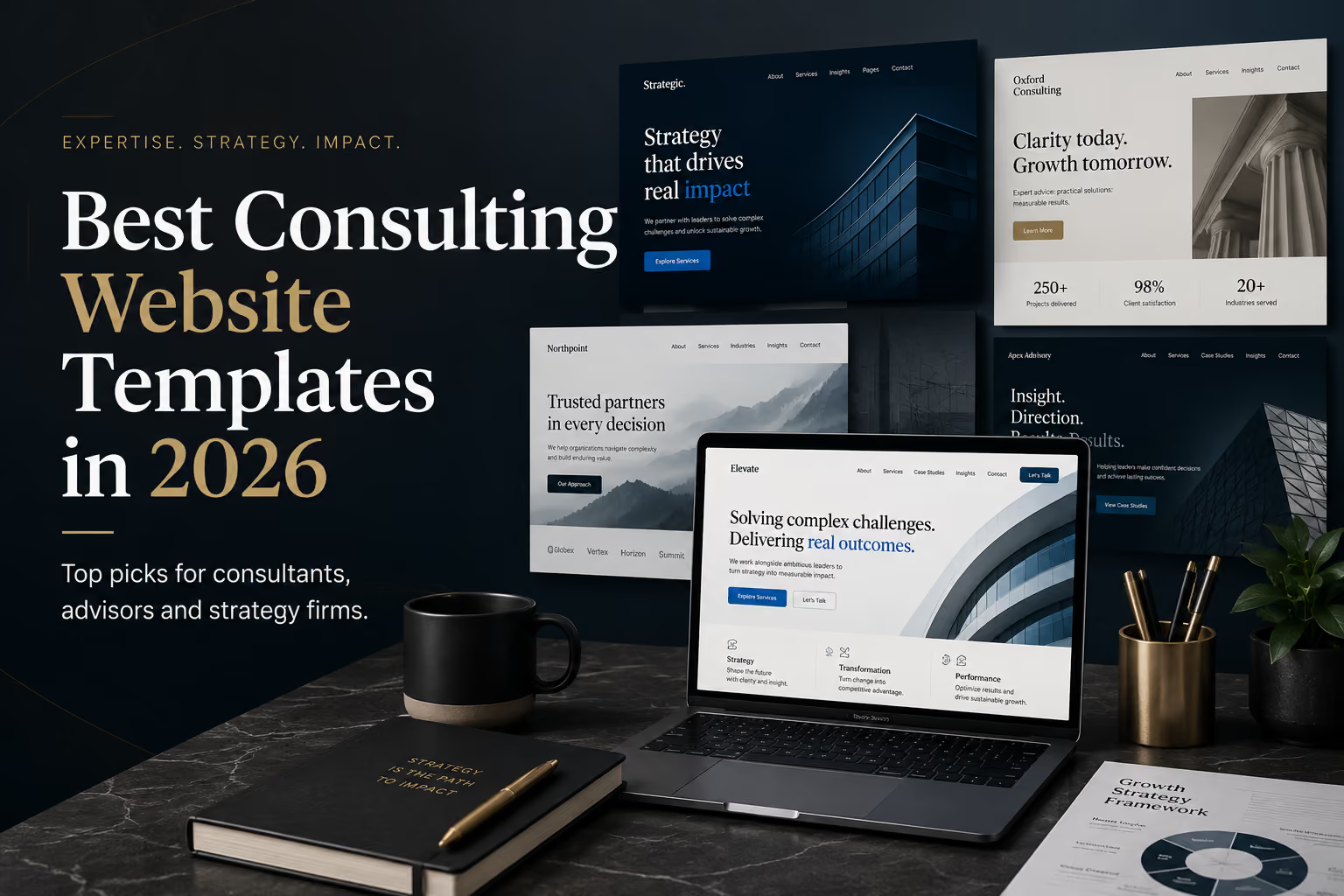
Quick answer: The best consulting website template is the one that makes expertise, services, proof and the next step obvious. For content-heavy consulting firms, Webflow is especially useful when case studies, services and insights need structured CMS workflows. Framer is a strong fit for consultants who prioritize fast visual iteration, polished motion and a simpler marketing-site workflow. In either platform, choose the structure that matches your sales process rather than the most dramatic demo.
| Template | Platform | Best for | Why it stands out |
|---|---|---|---|
| Norma Consulting | Webflow | Professional firms | Clear business hierarchy and service-led structure |
| Avante Consulting | Webflow | Modern advisory brands | Bolder visual direction without losing service clarity |
| Dinancē Finance | Webflow | Finance and advisory | Trust-oriented presentation for financial services |
| Consultant | Webflow | Coaches and consultants | CMS, ecommerce and a Figma source-file workflow |
| Konsult | Webflow | Solo consultants | Light, restrained design with CMS-managed services |
| Consulto | Framer | Consulting agencies | CMS content for services, case studies, teams and articles |
| Consultare | Framer | Advisory and B2B firms | CMS services, case studies and thought-leadership structure |
| Consultancy | Framer | New consulting practices | Free current marketplace option focused on lead generation |
Norma Consulting is a strong choice for strategy, finance and professional-service firms that need a conventional service hierarchy. It is most useful when credibility and clarity matter more than experimental art direction.
Avante Consulting takes a bolder visual approach while keeping the information architecture suitable for professional services. Consider it when the brand needs to feel contemporary without looking like a generic corporate site.
Dinancē Finance is particularly relevant to financial advisors and firms that need a trust-oriented visual system with room for services, business information and insights.
On the Webflow Marketplace, Consultant combines reusable styles with CMS and ecommerce support. Its creator also offers the Figma design source file to purchasers, which can be useful when a team wants to explore design changes before implementation.
Konsult is a restrained Webflow option for consultants, coaches and freelancers. Its service content is CMS-driven, and the template emphasizes reusable components and a simple grid rather than a large multipurpose page set.
Consulto is built for consultants, corporate agencies and service providers. Its Framer Marketplace listing highlights CMS-managed services, blogs, teams, careers and case studies, plus contact and quote-request forms. The listing was updated June 10, 2026.
Consultare is designed around services, CMS case studies, a blog and consultation booking. That makes it a useful structure for firms whose sales process depends on demonstrating outcomes before asking visitors to book a call. Its marketplace listing was updated August 6, 2026.
Consultancy is a free Framer Marketplace template published September 1, 2026. It targets strategy, management, finance, marketing, HR and freelance consulting use cases, with a straightforward conversion-oriented structure.
If your firm expects a substantial library of case studies, insights, services, team profiles or other structured content, start by evaluating Webflow templates. Webflow is also a practical choice when a marketing team wants granular control over CMS structure and a larger multi-page information architecture.
If the site is primarily a polished marketing presence and the team wants rapid visual iteration, modern motion and an approachable editing workflow, browse Framer templates. Current Framer consulting templates increasingly include CMS-powered case studies and insights, so the decision is not simply “CMS versus no CMS.”
A strong consulting template should make five things easy to find: who you help, what you do, evidence that it works, how your process works, and how to contact you. Before buying, inspect the actual service pages, case-study structure, team or founder presentation, insight/blog system, mobile navigation and contact flow.
Look for layouts that can explain the client situation, the work performed and the result. A beautiful project gallery is less useful for consulting if it cannot communicate business outcomes.
If organic search or executive thought leadership is part of the strategy, choose a template with a real CMS structure for insights rather than a static “blog-looking” page.
The service detail page, case study, about page and conversion path often matter more than the hero. Evaluate the entire template before committing to its visual direction.
Replace the demo identity completely: typography, palette, imagery, claims, proof, service taxonomy and section order should reflect the actual firm. Keep the useful structural work, but remove generic counters, placeholder logos and unsupported claims. A template should accelerate the build, not dictate the positioning.
Flowmance’s broader library spans Webflow, Framer, Figma and HTML-ready directions. Start with the Webflow template hub or Framer template hub, then compare individual structures against your content and sales process. For broader library access, see Flowmance+.
There is no universal winner. Webflow is especially strong for structured, content-rich consulting sites; Framer is compelling for fast, design-led marketing sites. Choose based on content operations, editing workflow and the complexity of the site rather than platform popularity alone.
Use a CMS when services, case studies, insights, team members or resources will grow over time. A small solo-consultant site with only a few fixed pages may not need a complex content model.
Yes. The biggest determinants are positioning, copy, proof, imagery, typography and how deeply the demo structure is adapted. Two firms can start from the same underlying template and produce very different final websites.







Don’t miss out on our superb, customizable templates designed to enhance your web design experience. We constantly add new templates and components.

Explore stunning Webflow, Framer, HTML5, Next.js and Figma templates designed to spark your next big idea.


*Rest assured that your data is safe with us, and you'll only hear from us 1 time per month.